Anyone interested in EARTH-FRIENDLY BUILDING PRACTICES? (42)
-

-
 Jan 30, 2026 6:23 PM UTCThe time is right to embrace smart, sustainable buildings, new service delivery models and transformational technologies to
improve the virtue of properties, support healthy indoor living conditions.
Eco-friendly transporation aims to reduce greenhouse gas emissions, improve air quality, and promote sustainable urban mobility by providing safe, affordable, and equitable access to mobility.
-
 Jan 30, 2026 9:24 PM UTCMany of the earth friendly types of building aren't always practical to build and in the long run tend to fall apart. I haven't really kept up so maybe there's something newer that's better but some of the past stuff wasn't so good.
Straw bale construction when done right can work well but humidity and insect/vermin intrusion can be an issue when not built to keep them out. You would still want to use concrete for a good solid floor and footings plus a large roof overhang to keep as much moisture from rain off the stucco walls especially when living in a wet area. Places like Arizona, New Mexico and parts of Texas would work best for straw bale construction. A big advantage of straw bale construction is because of how thick the walls are very little heating and cooling is required so incorporating a lot of south facing windows for solar gain which become a liability in the summer aren't needed because it's so easy and cheap now to heat and cool.
I was interested in Aquaponics until I looked into it and found out that it requires a lot of chemicals/fertilizer to work. It's possible to do it without additional chemicals but it would need a huge setup that wouldn't be practical. I got the information from those who tried it not knowing just what it took to actually do it. All of them stopped after several years of trying to make it work due to the cost being higher than the benefit.
One of the problems with trying to be more green is you have people promoting it that profit from it because they supply what's needed and aren't honest about the cost or the work involved. Then you have those who push it without actually knowing what it takes nor do they care because they're just pushers of green and not interested in doing it. Then you have those who are doing it and believe in it so strongly they want everybody to do it and may or may not be honest about how much work or all the other costs it takes because they believe everyone should be doing it no matter the cost.
I'm one who believes there can be a happy medium between cost, technology, natural methods and materials that can outperform most methods but there doesn't seem to be anybody that is trying to do that to any large degree. I'm partial to straw bale construction because I did a lot of research on straw bale construction and designed a house for a 5 acre lot I was purchasing in the Arizona desert. What held me back from going ahead with building was how I would power it because it wasn't near any power infrastructure.
At the time solar power was extremely expensive and battery technology wasn't up to the task. But now solar is much more affordable and batteries are at a point where they are very safe and cost effective and far and above the wet cell batteries of that time. It was back in the late 80's when I was buying the property in AZ and have since gotten rid of but with today's technology that house I designed could have easily and cheaply been heated and cooled with solar.
Since then the only thing I've done was put in a modest solar setup in my current home which for its size has done more than I honestly thought it would do.
-
Jan 31, 2026 12:48 AM UTC
Quote:
Nice to have a blog here on earth-friendly building practices
and earth-friendly transportation.
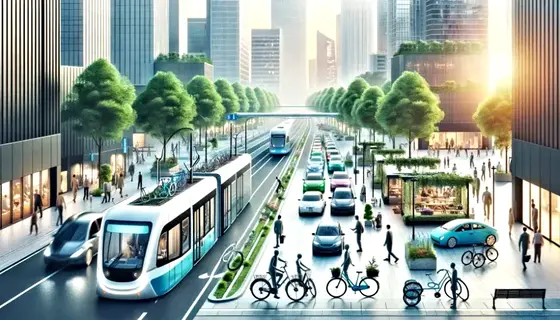
I like to make use of eco-friendly transportation in my daily life. Of the many ways we can help save the planet, using green technology for transport could be one of the most significant. Besides, I can enjoy the advantages of eco-friendly transportation on my own schedule and reach places that may not be commuter friendly.
1. Walking Short to Medium Distances.
As I am not in a hurry, it could do me some good to take the most basic form of human transportation. Walking also counts as daily exercise and may provide health benefits. However, I will consider my stamina and physical energy before attempting very long walks just to get to a needed destination.
2. Cycling All Over My Neighborhood.
I consider other forms of body-powered vehicles, like a scooter or a skateboard, but none can compare to the widespread appeal of the bicycle. Before choosing to bike around the neighborhood, I will take stock of the surrounding roads and typical atmospheric conditions to make sure there are enough bike lanes or if the neighborhood area doesn’t experience bad weather.
3. Riding Motorcycles or Electric Bikes.
Due to their relatively low weight and small size, even conventional motorcycles are sometimes considered more fuel-efficient than four-wheeled alternatives. I need to make sure to check if local laws and regulations will allow me to use it, though.
4. Driving and Maintaining Eco-Friendly Cars.
Being hesitant to make the switch and purchase an electric or hybrid vehicle, I will at least consider using a fuel-efficient or biofuel-powered car. In the U.S., I won’t find it too difficult to find gas stations that offer biodiesel or ethanol-blended fuel. I will as well use the government-provided online calculator to assess my car’s impact on the environment as compared to others.
5. Carpooling
Filling the seats of my car completely before heading out helps reduce transport emissions by requiring fewer vehicles. I may carpool with family and friends, instead of strangers, if privacy or safety is an issue.
Uber, Lyft, and Waze have been trying to bring back carpooling with limited success. The U.S. calls their version of this as high-occupancy vehicle (HOV) lanes.
6. Taking the Bus to Get Around
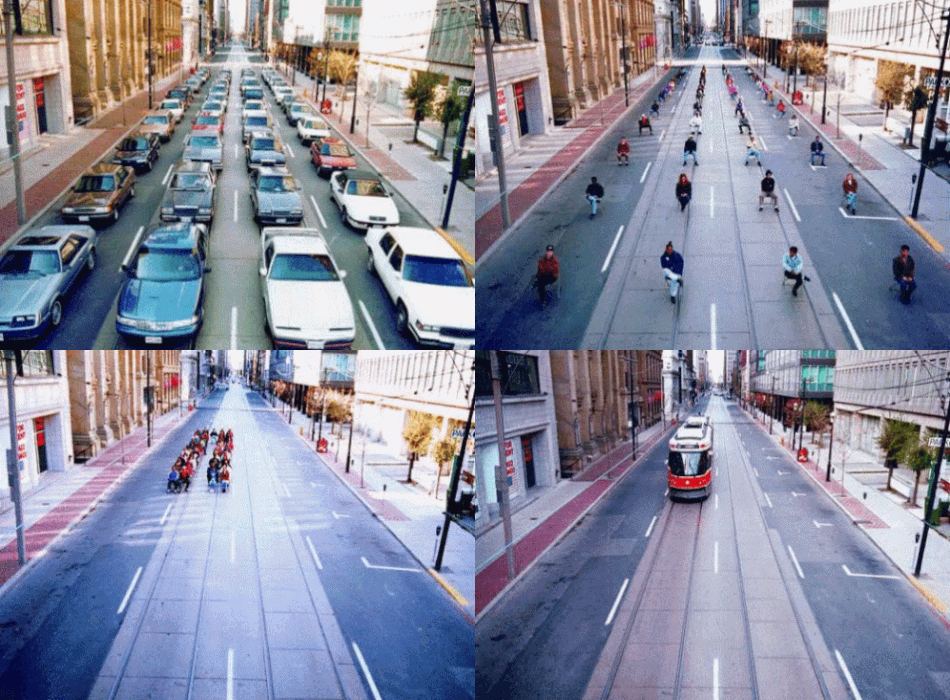
Public bus systems can theoretically get us to our destination at relatively the same time it would take for us to drive ourselves, especially since we won’t have to worry about finding a parking space.
We may be limited by the scheduled stops, but bus systems have been the historically efficient means of transportation for decades.
7. Using Intercity, Subway and Commuter Railway Systems.
When I am not in a hurry to get to my destination or want the scenic route to be part of my journey, I take the CTA train. It operates a vast network of buses and trains across Chicago city providing regular and frequent service to minimize wait times.
-
Jan 31, 2026 1:49 AM UTCAMEN
Thank you both for contributing!
When I lived in a city, I walked to work, bicycled to work, rollerbladed to work and once in a while lowered my standards and took a bus. Those are certainly earth-friendlier approaches. And exercise has its benefits.
Yes, I have considered strawbale construction. With an over-extended roof, one can keep the strawbale walls more dry and avoid some problems. I thought to build a strawbale dog house for my dogs as well. One can do a lot with bales.
Earth is definitely an approach I want to build with. Earth is in its final form. A great building material.
I definitely want a sunroom. Many things one can do with sunrooms. One can help to heat a house with a sunroom. One can heat water with sunlight. One can dry their clothes in a sunroom. So, very much I want a sunroom.
There are many approaches one can take for eco-friendly dwellings and eco-friendly transportation. It is a great subject to be on and there are many ways approach doing it and going about it. I hope to do a few.
I'd like to see more of the ideas you come up with and that you find on the internet.
A favorite book of mine is called "A Golden Thread" "A history of solar energy"
Great for those things you shared. Thanks much and I hope you share more. -
Jan 31, 2026 2:00 AM UTC
Quote:
AMEN
Thank you both for contributing!
When I lived in a city, I walked to work, bicycled to work, rollerbladed to work and once in a while lowered my standards and took a bus. Those are certainly earth-friendlier approaches. And exercise has its benefits.
Yes, I have considered strawbale construction. With an over-extended roof, one can keep the strawbale walls more dry and avoid some problems. I thought to build a strawbale dog house for my dogs as well. One can do a lot with bales.
Earth is definitely an approach I want to build with. Earth is in its final form. A great building material.
I definitely want a sunroom. Many things one can do with sunrooms. One can help to heat a house with a sunroom. One can heat water with sunlight. One can dry their clothes in a sunroom. So, very much I want a sunroom.
There are many approaches one can take for eco-friendly dwellings and eco-friendly transportation. It is a great subject to be on and there are many ways approach doing it and going about it. I hope to do a few.
I'd like to see more of the ideas you come up with and that you find on the internet.
A favorite book of mine is called "A Golden Thread" "A history of solar energy"
Great for those things you shared. Thanks much and I hope you share more. -
Jan 31, 2026 2:06 AM UTCI'd like a solar assist vehicle that one can peddle when they want.
Compressed air vehicles are very fuel efficient. It is possible to have a compressed air powered vehicle that solar panels provide the little power needed for a flow of air into the compressed air components that power a vehicle efficiently for free.
Also, magnets repelling magnets can provide a free source of electricity to power a vehicle. So, there are lots of possibilities there. If you want a car built right, you got to build it yourself. -
Feb 1, 2026 2:02 AM UTCSome side comments. Many don't understand the limitations of many things such as solar panels and wind generators. The large commercial wind generators do generate a lot of power when enough wind is present but the smaller ones marketed to consumers don't seem to come close to producing what they're advertised to produce and even if they did it's usually not much compared to what solar produces for the same cost.
For both solar and wind generators most people don't understand watts, amps, kilowatts, volts and how it all relates to the output of solar/wind systems or how it compares to their home usage. Because if this many people get taken advantage of by door to door solar panel salesmen. They get sold overly inflated grid-tie solar systems expecting them to cover most or all their electrical needs and then it gets compounded by the lack of understanding of how they work with the utility companies and how little utility companies pay for the power generated. So what ends up happening is they end up paying a lot more for electricity because many utility companies can charge more for those with grid-tie systems on top of what the systems cost. Many also don't know with a grid-tie system if the grid goes down your solar panels are useless unless you have a hybrid system with battery back up which adds a lot more money on top of an already overpriced system.
Unfortunately most don't even come close to understanding just how difficult it would be to implement anything environmentalists think should be forced upon everyone when it comes to generating power or even moving people around among other things. The most efficient way to generate power is with Nuclear power plants which have been shown to be very clean and safe but because of the prolific use of propaganda many will never believe or be given the truth about nuclear power. Solar or wind aren't as safe, efficient and as clean because of the energy that's needed to produce them and the waste that's generated during manufacture especially when you factor in the use of batteries for storage of electrical energy and then the disposal of things like the wind generator blades which are huge and just get buried in the ground because there's currently no one who recycles the them.
Electric vehicles are some of the worst when it comes to what it takes to build them compared to internal combustion cars and buses. Many of the electric cars and trucks made by everyone except Tesla have been failures and sent prematurely to the scrap heap because there were so many bugs that they couldn't even repair even though they designed and manufactured them. Plus repair parts like batteries cost more than the car/truck cost to replace so why would anyone purchase one unless throwing away money is a fetish they have? -
Feb 1, 2026 10:59 AM UTCThanks for sharing all that.
-
Feb 1, 2026 11:10 AM UTCStill, I'm optimistic.
It is good to have the flaws pointed out.
Some approaches are filled with problems and said and done, the worth is not there.
Yet some other approaches have worth in pursuing, and we are better off for it. Through approaches with fewer problems, we can make better housing and better transportation in more eco-friendly manners. -
Feb 1, 2026 1:51 PM UTC
Quote:
Still, I'm optimistic.
It is good to have the flaws pointed out.
Some approaches are filled with problems and said and done, the worth is not there.
Yet some other approaches have worth in pursuing, and we are better off for it. Through approaches with fewer problems, we can make better housing and better transportation in more eco-friendly manners.
Thoroughly educating yourself is the key because there are a number of people making ridiculous claims and then those claims are repeated by people who know nothing about how true the claims are but want to believe everything because it's "eco'friendly". Most "eco'friendly" things might look good and appear to solve a lot of problems but everything has a catch to it. most times those catches are huge and are more trouble than they're worth. Not unlike the reasons I didn't build my house in the Arizona desert. Now the problems of powering that house ere pretty much solved with the only other issue I had was water, but that is the same today as it was then. Empty your bank account to over pay a well driller to dig a well. -
Feb 1, 2026 2:57 PM UTCYou may still be able to build that house in the Arizona desert.
There is a device that gathers water from the air.
There are devices to catch the dew and channel droplets of water to containers.
There are devices to capture condensation.
There are devices to capture moisture from the air.
You can have a nice existence in a desert. -
Feb 1, 2026 11:17 PM UTCIdeas are welcome for going green
-
Feb 2, 2026 3:15 AM UTC
Quote:
You may still be able to build that house in the Arizona desert.
There is a device that gathers water from the air.
There are devices to catch the dew and channel droplets of water to containers.
There are devices to capture condensation.
There are devices to capture moisture from the air.
You can have a nice existence in a desert.
I saw a device on you tube that a guy was testing that gathered water from the air. It looked interesting so I went to the product website and the price was ridicules. they had a few sizes and only one produced a usable amount of water. I think it least $50,000 and needed a large amount of power which I think was as much as an average size house. It was basically just a large refrigeration system with a large compressor with evaporator and condenser coils. It would have been a lot more useful had it also been designed to heat and cool a house which it was perfectly capable of doing given the fact that it was just an industrial size air conditioner. -
Feb 3, 2026 2:05 AM UTC
Quote:
Ideas are welcome for going green
¬Water is becoming an increasingly important issue in the developed world. But this issue is nothing new for other, less developed nations. For centuries, clean drinking water has been hard to come by for many populations, especially those in impoverished nations. In some areas, water may be available, but it's often disease-ridden, and drinking it can be fatal. In other areas, a viable water supply is sim¬ply not available at all.
Combustion:
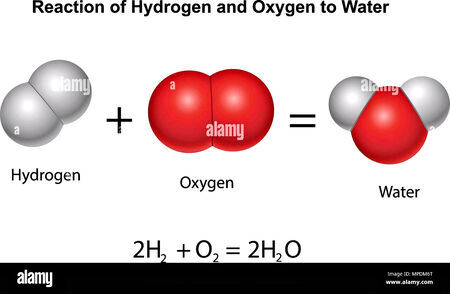
Water is made of two hydrogen atoms attached to an oxygen atom. This seems like pretty basic chemistry, so why don't we just smash them together and solve the world's water ills? Theoretically, this is possible, but it would be an extremely dangerous process, too.
Electrolysis:
Use electricity to split water molecules into hydrogen and oxygen, then recombine them.
Atmospheric Water Generation:
Utilize devices that extract moisture from the air and condense it into liquid water.
Desalination:
Remove salt and impurities from seawater through reverse osmosis or distillation processes.
Hydrogen Fuel Combustion:
Burn hydrogen in the presence of oxygen to produce water vapor, which can be condensed into liquid water.
Chemical Reactions:
Combine hydrogen and oxygen gases in controlled environments to synthesize water.
Biomimicry:
Develop systems inspired by natural processes, such as plants that absorb and release moisture.
Then, Why don’t we..?
(I shall go through the potential challenges of creating water artificially if the scope of this post doesn’t exceed its limits.)
At a laboratory in a Southern California warehouse, scientist Heng Su unveils what could be a world-changing solution to the global water crisis. The small handheld object looks unremarkable, consisting of stacked white fins that resemble a miniature old-fashioned apartment radiator. This is a lab prototype designed to only produce a few milliliters of water as scientists work to perfect the technology. The company plans on building a full-scale commercial version that could produce thousands of liters of ultrapure water a day for a community.
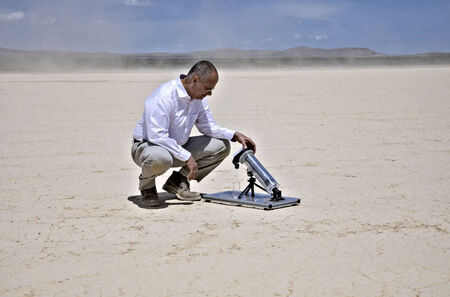
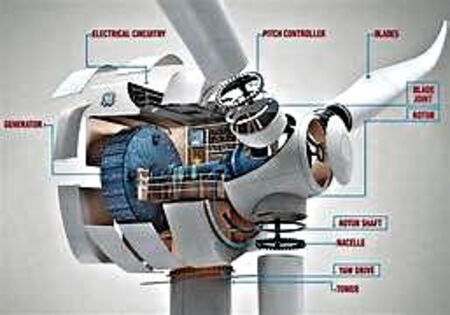
Australian inventor Max Whisson is using another approach. His Whisson Windmill uses wind power to collect water out of the atmosphere. Whisson's windmill uses refrigerant to cool the blades of his mill, which he's named Max Water. The biggest challenge isn't the engineering behind his invention but finding the venture capital to back it.
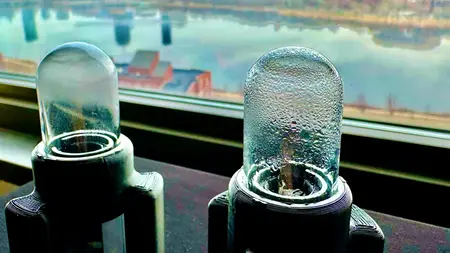
Researchers at MIT have tested a new technology, a high-tech "bubble wrap" for turning water vapor in the atmosphere into drinkable water, even in extreme environments.
The Future of Artificial Water Creation
As we look toward the future, the potential for artificially creating water will become increasingly significant. With advancements in technology and a growing focus on sustainable practices, there are numerous factors to consider for creating water in a manner that benefits society without harming the environment.
Technological Innovations
Innovations in renewable energy, materials science, and chemical engineering will play a crucial role in enhancing methods for synthesizing water or extracting clean water from the environment. For instance, improved filtration systems for atmospheric water generation could lead to more significant yields, while advancements in electrolysis could make the process more energy-efficient.
Economic Viability
Producing water artificially must also be economically feasible. Costs associated with hydrogen production, as well as technology and infrastructure for water generation, need to be addressed to make this approach viable on a large scale.
Ethical Considerations
There are ethical considerations regarding water rights and accessibility. Creating water artificially should not exacerbate inequalities regarding water distribution; rather, it should aim to enhance global access to clean water.
-
Feb 3, 2026 4:16 PM UTC
Quote:
Producing water artificially must also be economically feasible. Costs associated with hydrogen production, as well as technology and infrastructure for water generation, need to be addressed to make this approach viable on a large scale.
Therein lies the crux of many problems. Hydrogen fuel cells produce both water and electricity. But like always there's a catch or in this case many and begins with manufacturing which requires a lot of electricity. And then we come to storing. Hydrogen has to be stored at a very high pressure and requires very specialized tanks and piping. It would also need to be distributed and there is currently no infrastructure to move it around and dispense it safely. So to do any of what's been pointed out so far there would have to be a very large capital expenditure
And then the fact that it's extremely volatile and with the large drop in I.Q. points the left has cultivated. I would expect many deaths associated with it's use and ambulance chasers lawyers coming out of the woodwork and contributing to the destruction of any possible viability it might have had. In other words who would be willing to accept the liability? Government? Like always that would be a shit show wealth transfer based on over charging consumers and filling the pockets politicians and their friends. All of which is why it has largely been abandoned and also why many great ideas seem good but are fraught with many pitfalls and will likely never get off the ground. -
Feb 3, 2026 6:45 PM UTC
Quote:
Like always that would be a shit show wealth transfer based on over charging consumers and filling the pockets politicians and their friends.
Storage of hydrogen as a gas typically requires high-pressure tanks (350–700 bar [5,000–10,000 psi] tank pressure). All piping should be compatible with hydrogen to prevent leaks and be regularly inspected for wear and damage to maintain roper ventilation. Besides, storage of hydrogen as a liquid requires cryogenic temperatures and strict safely regulations and guidelines shuld be maintained with traned personal on handing and emergency procedure.
Yes, there are bureaucratic hurdles that delay or obstruct innovation processes. We should promote collaboration between scientists and policymakers to align goals, encourage public awareness and support for scientific advancements. The impact of political agendas on research funding and priorities should be minimized. If political forces succeed in dismantling innovations, the resulting cost will be measured in deaths, despair and dismay.
The future of our people and planet depends on our willingness to fight for it.

-
Feb 3, 2026 10:39 PM UTCEnhancing global access to clean water sounds good!
-
Feb 3, 2026 10:47 PM UTCOne can also separate water into its parts and power a car from hydrogen as you separate water into its parts. It doesn't even have to be clean water. One can power such a car using one's own urine and getting the hydrogen from there. But hydrogen storage and hydrogen stations are like inviting "The Hindenburg". Only Big Money interests would want that we have vehicles go that way with hydrogen stations and hydrogen storage for hydrogen cars. Better to power a car as you separate water into its parts.
-
Feb 3, 2026 10:49 PM UTCBut where are those kinds of cars?
They don't want you to drive them.
They don't want you to build them.
They do exist, but the people who drive them cannot market them and cannot tell you how they had done it.
They are warned. -
Feb 3, 2026 10:54 PM UTCSuch go the way of many ideas.
-
Feb 3, 2026 11:20 PM UTC
Quote:
One can also separate water into its parts and power a car from hydrogen as you separate water into its parts. It doesn't even have to be clean water. One can power such a car using one's own urine and getting the hydrogen from there. But hydrogen storage and hydrogen stations are like inviting "The Hindenburg". Only Big Money interests would want that we have vehicles go that way with hydrogen stations and hydrogen storage for hydrogen cars. Better to power a car as you separate water into its parts.
Water electrolysis involves using electricity to break down water (H₂O) into hydrogen (H₂) and oxygen (O₂) gases. An electrolytic cell is used, consisting of two electrodes: an anode and a cathode. When a direct current is applied, water molecules are oxidized at the anode, releasing oxygen. At the cathode, water molecules are reduced, producing hydrogen gas.
Splitting water requires a significant amount of energy, often more than the energy produced from the hydrogen generated. Current electrolysis methods are not highly efficient, leading to energy losses. Effective catalysts needed for the process are often rare or costly and not widely accessible. Overall, a robust infrastructure for hydrogen storage and distribution is lacking.
The only mechanism that splits water and make use of its hydrogen ions without any expense is photosynthesis which sthe plant kingdom sublimely performs.
-
Feb 4, 2026 8:17 PM UTCRadio frequency can also separate water into its parts.
-
Feb 4, 2026 8:18 PM UTCIt is easier than we are led to believe.
-
Feb 4, 2026 9:03 PM UTC
Quote:
Radio frequency can also separate water into its parts.
A team of chemists at Western Illinois University have succeeded decomposition of water vapor into hydrogen peroxide and hydrogen using radio frequency waves. Recently, a Russian team reported the apparent dissociation of water into hydrogen and hydroxyl radicals using microwaves.
Sadly, the real question now is whether this process is any more energy-efficient than standard electrolysis. The force of water’s mythology, for this is a substance that has throughout history been lauded as a savior and source of miracles.
-
Feb 4, 2026 9:46 PM UTCA Philippine man in the Philippines who is driving his own hydrogen car that he made himself is not complaining about his car. He shared the idea with Marcos and Marcos then shared it. But they killed the idea because THE WORLD BANK SAID "NO" to it, and because the Philippines is indebted to THE WORLD BANK, they did not pursue replicating the hydrogen vehicle. They were not to compete with the interests of THE WORLD BANK. So, that killed the idea. The man is allowed to drive his car. But he is not to tell people how he does it. They don't want you driving such things. They don't want it shared with the masses. They don't want you to have this knowledge. They want you to be indebted to another way of doing things.
-
Feb 4, 2026 10:41 PM UTCHere's a cute little free energy device someone made on youtube
https://youtu.be/GP2F3-DW6po?si=gSmnAAK1RCqdfDuE -
Feb 5, 2026 12:09 AM UTC

Cow burps mostly emit methane gases and a lot of people have been trying to collect it by attaching a balloon to its butt, and the initiative is being successful. Methane digesters, that convert manure from lagoons into electricity for use on dairy farms are popping up across the world, and that is an effective way to save helping the environment at the same time. -
Feb 5, 2026 12:17 AM UTC
Quote:
Here's a cute little free energy device someone made on youtube
https://youtu.be/GP2F3-DW6po?si=gSmnAAK1RCqdfDuE
Did you read any of the comments? -
Feb 6, 2026 1:00 AM UTCNice cow painting.
I think a cow diaper would do better.
But maybe that gas is equivalent to helium and that balloon will go places. -
Feb 6, 2026 1:01 AM UTCHere's another from youtube.
Looks promising!
"Top 5 powerful generator for home use Electricity 220v 10000w self running 100%" -
Feb 6, 2026 2:55 PM UTC
Quote:
Here's another from youtube.
Looks promising!
"Top 5 powerful generator for home use Electricity 220v 10000w self running 100%"
I didn't get much sleep so I watched the video and first off none of the projects would do any power generating and I saw a few sleight of hand maneuvers. Every time after the last thing was hot glued to the board. There was a cut in the video and the reason for this was in between video cuts he performed some modifications:
1. Was to modify the bottom of the board so a wire would be connected from underneath the table and the board had a channel routed from roughly the center to where he glued the mini power strip.
2. he was very careful not to show the bottom of the power strip in any videos because of the hole he already had a hole drilled in it for the wire to be fed through the bottom of the board after it was drilled.
3. He could have connected the wire to the mini power strip a couple ways after he glued it to the board. He could have just pulled it back off because he only used 1 little strip of glue or more likely he just removed the mini power strip cover and drilled the hole through the board to line up with the routed channel underneath the board which was put there to bring the wire hidden underneath the board and over to the center of the board.
4. He would then attach a cord to carry the power for the 2 light bulbs and the power supply for the little motor and then run the wire he just attached to the mini power strip under the board and reattach the cover back onto the mini strip. He would then hot glue the cord to the underside of the board in the channel he had previously routed into it. The reason for that was to bring the power cord to the center of the board and keep it up and out of the way so he can cleanly rotate the board around.
5. At the beginning of each video if you notice when he began hot gluing things on the board he would rotate the board around pretty rapidly and a little haphazardly but after the cut in the video he was a lot more slow and controlled about how he would rotate to board and tried harder to keep in one spot. The reason for that was during the cut in the video and after he did his routing and wire modifications he moved his concoctions to another part of the table that had a hole drilled through it to pass the power cord to hook up the power.
6. The last thing was the LED light on the power supply. It turned on when he started the motor. This could have been done with a little electronic sleight of hand. The power supply was used to power the motor and for the LED he made a little electronic circuitry that picked up on feedback generated by the motor and that turned on the LED when the motor started. It took me a minute until I realized that the motor looks like a Mabuchi 540 that I've played with before and they usually have capacitors soldered to each + and - wire connection and then soldered to the body of the motor to reduce the feedback generated by the motor so without them his sleight of hand circuitry would work. Or he just had a switch that he used to turn on the power with his other hand right when he spun the motor to again give the illusion it was generating power.
The Mabuchi like a lot of brushed DC motors can be used to generate a small amount of power but in this case it was powered by that little power supply. In fact that power supply could barely power it, that's why he had to start it by turning it with his hand and the same with the fan concoction he constructed. But like any motor, alternator or generator they need to be rotated to generate power and when a load is applied whatever is turning them must be able to continue turning them under that load. For example if you have ever used a gas generator and while it's running with a light load or no load there's no change but as soon as a large load is applied you will hear the gas engine bog down sometimes it will slow way down but then catch back up which is due to the lag time of the governor supplying the additional fuel required to keep the motor running at the same speed to meet the load. It's no different then when you're driving your car and you hit a steep hill and need to push down more on your can pedal to keep the same speed and climb the hill. It always takes more fuel to keep the motor tirning to meet the load demanded.
No matter what method is used to turn a generator or any type of energy conversion there are always losses. More energy in less energy out. -
Feb 6, 2026 4:30 PM UTCI didn't see the magician tricks that you saw. And yes, I did read the comments.
Simple materials. Readily available. But obviously, you did not seek to replicate the projects. You just comment without trying to replicate.
For all the words you said, in the time it took you to say them, you could have already replicated one of these simple do-it-yourself projects.
I plan to replicate the projects.
Because they are so simple, I figure that I can do it myself.
It looks like something a child could do. -
Feb 6, 2026 7:13 PM UTC
Quote:
I didn't see the magician tricks that you saw. And yes, I did read the comments.
Simple materials. Readily available. But obviously, you did not seek to replicate the projects. You just comment without trying to replicate.
For all the words you said, in the time it took you to say them, you could have already replicated one of these simple do-it-yourself projects.
I plan to replicate the projects.
Because they are so simple, I figure that I can do it myself.
It looks like something a child could do.
2 different videos. The first one you mentioned had accurate comments the second only had a few that I didn't even read. Either video I don't have to build any of them because I already know none of them will generate anything except views for the one who built these Rube Goldberg machines.
Please let us know how well they work for you. But please video your work building them so you can at least post them on youtube and maybe instead of generating power you can generate some income. -
Feb 6, 2026 9:23 PM UTCI'm glad that you have done somethings with solar.
I want to do some things with solar too.
When I replicate some of the very simple FREE ENERGY DEVICE projects, I will let you know the results. Some appear simple -
 Feb 8, 2026 9:30 PM UTCGood day to you Mister,
Here in the UK it’s the same story, unpredictable weather patterns and people struggling with paying increasingly costly fuel bills – is that politics, climate change, greedy bastard utility companies or all three?! Apart from public venues, most of our old built homes don’t have solar panels or air conditioning to deal with the recent heat-waves; they are still in the coal fire and chimney era… Only to be expected because modernising everything takes time and money as you know. Things are happening with good intentions for the environment but for some (coastal erosion for example) there’s nothing they can do. In an ideal world we wouldn’t have to pay anything for our energy but the government and energy suppliers don’t want to lose profit, which is all it’s about!
I think these days people are far too spoilt. Too much is taken for granted with instant hot water for however long they want it (no walking miles to fetch it from a well is there?). Everything is instant while people sit on their fat arse (that’s English for ‘a**’) Too much crappy fattening food available (no going out to hunt with a spear now is there?) No effort required whatsoever to turn into a self-entitled slob of humanity!
But anyway, embracing the ethos of the four ‘Rs’ – Reduce, Repair, Reuse and Recycle - I like the idea of making more use of what we throw away and came across this article with an interesting chap who back in 1971 made bricks and a house out of beer cans. Then developed his ‘Earthships’ using tyres, wine bottles, wood and mud...
https://www.bbc.co.uk/travel/article/20241002-the-us-homes-made-from-waste-materials
I’m inspired. And in my secret laboratory I’m working on an anti-wrinkle ‘miracle cream’ (for the vanity obsessed) composed of pickled banana peels, urine and clementine pith amongst other mystery ingredients. One application to the face will take off twenty years… Cheers
-
Feb 8, 2026 9:46 PM UTCNice to have you here, Tealight! Welcome to the discussion.
My last winter electric bill was almost 640 USD for hardly having any warmth and not even watching tv.
Our electric boiler failed and estimates for a new one were more than we paid for the house.
The propane fireplace helped a while, but during strong winds, it frequently goes out.
And the propane fireplace seems to need servicing every year.
Sometimes, the repairman charges a thousand dollars.
I never save any money in the winter.
This year, I've been using plug-in heaters till I got the propane fireplace to work.
Now I'm thinking of mini-splits, but I don't know that mini-splits are good in the extreme cold.
Really, I'd like a passive solar arrangement on the south-facing side.
I don't like the power company getting rich off me. -
-
Feb 8, 2026 9:59 PM UTCThank you for sharing your secret to younger skin, and thanks for sharing the "FOUR R's"
Some earthships are built out of old tires rammed with dirt-fill and given glass south-facing fronts.
Here in the U.S. those earthship constructions have cost as much to build as a conventional house as they are labor intense with the ramming of earth into the old tires.
Cordwood houses are often built with different color glass bottles layed into the mortar.
Some lovely cottages have been made out of cordwood.
Thanks for sharing that, Tealight. I will have to give it a look. -
Feb 8, 2026 11:05 PM UTCAmazing how I can have a $13 water bill and a $640 electric bill.
-
Feb 8, 2026 11:41 PM UTC
Quote:
What are mini-splits?
Mini splits are a smaller version of a whole house air conditioner/heat pump. They're typically very energy efficient and designed for a single room or multiple rooms. One big advantage is you can have different temperatures for each room or shut a room off altogether. They also are very efficient as heaters usually more so than they're as an air conditioner. Many made to be installed by someone who's very handy rather than paying a professional. -
Feb 17, 2026 6:44 PM UTCMini-split systems both heat and cool a dwelling using outside air. They grab the warmth out of outside air when you want to heat a house, and they grab the coolness out of outside air to cool your room. It is said that they are very energy efficient. So, I find myself contemplating getting two or three. I want to reduce my electric bill. And I want to better heat my home.


 Introduction To Friends List
and earth-friendly transportation.